
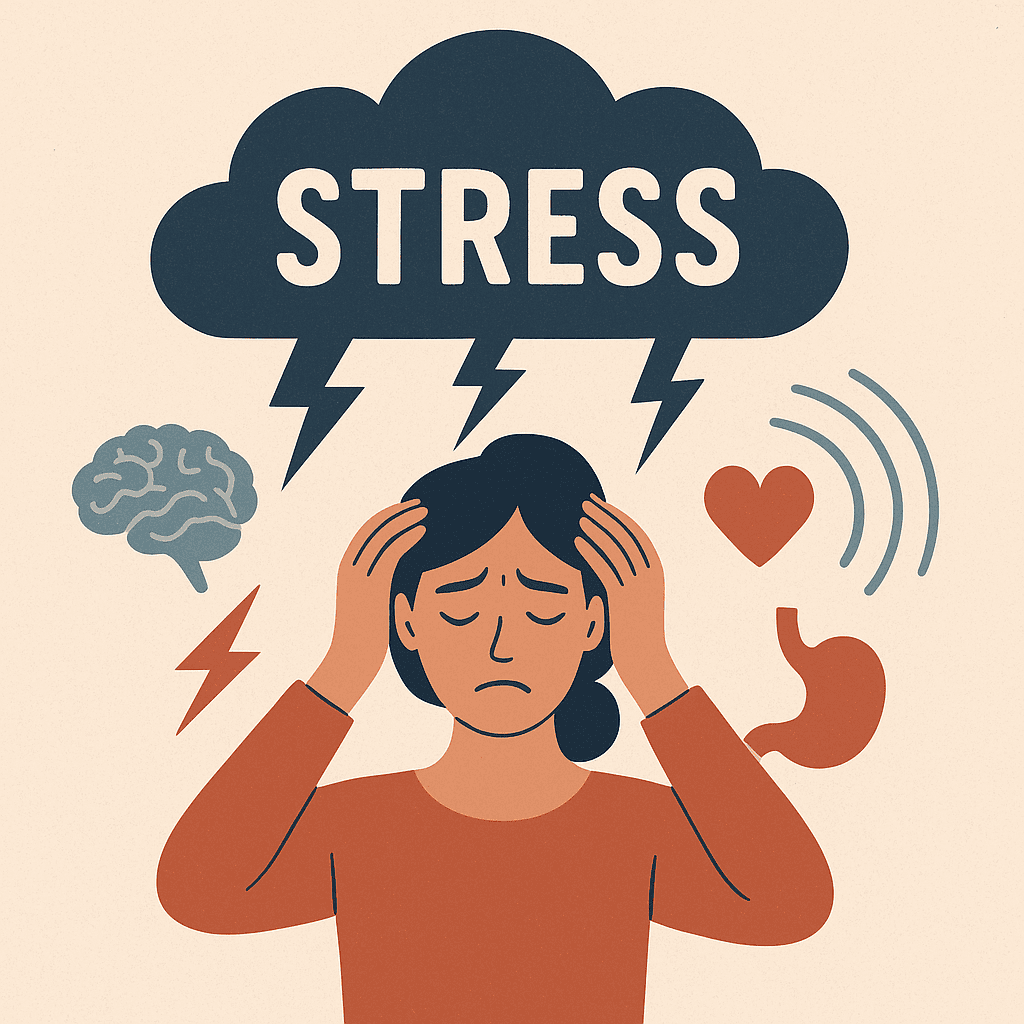
The Silent Weight of Stress: What It Does to Your Body, Why You Don’t Notice It, and When It’s Time for SIRPA
Most people say, “I’m not stressed.”
And then they casually list symptoms that read like a neurology exam, a gastro clinic referral, and a physiotherapy intake form all rolled into one.
Welcome to stress in the 21st century: silent, sneaky, and absolutely relentless.
Today marks the last day of Stress Awareness Week — the perfect moment to talk honestly about stress, chronic symptoms, and why so many people don’t realise their health issues are stress-driven even when their body is screaming it.
The Real Impact of Stress (Physiology, Not Instagram Wellness Platitudes)
Stress isn’t “just in your head.”
It’s in your nervous system, your fascia, your breathing pattern, your gut motility, your hormones, and basically any bodily system that relies on regulation (so… all of them).
When stress becomes chronic, the body shifts into long-term survival mode:
-
Adrenal and autonomic dysregulation
-
Muscular bracing and altered posture
-
Reduced vagal tone
-
Shallow, upper-chest breathing
-
Altered pain processing in the brain
-
Gut-brain axis dysfunction
-
Increased sensitivity to everyday sensations
This is not “mental stress equals mental feelings.”
This is whole-system physiological change.
This is why SIRPA exists.
How Stress Shows Up in the Body (And Why You Don’t Recognise It)
Here’s the fun part:
Most people who are stressed don’t feel stressed.
Why?
Because your brain’s priority is survival, not honest emotional self-reporting.
Common stress-driven symptoms people mistake for “something physically wrong”:
Musculoskeletal
-
Neck/shoulder tightness for “no reason”
-
Jaw tension
-
Rib cage restriction
-
Sudden sciatic-type pain
-
Migrating pain that makes no anatomical sense
Neurological
-
Tingling without a clear injury
-
Head pressure
-
Dizziness/lightheadedness
-
Sensory weirdness
Gastrointestinal
-
Bloating
-
Gut immobility
-
IBS swings
-
“Random nausea”
Respiratory
-
Breathlessness even when heart and lungs are fine
-
Chest tightness
-
Air hunger
General
-
Fatigue that sleep doesn’t fix
-
Hormonal havoc
-
Sleep disruption
-
Inability to relax (but “not stressed”)
When these symptoms persist, the nervous system starts believing the body is unsafe, which creates a feedback loop:
Stress → Sensitivity → Symptoms → Fear → More symptoms.
This is where chronic illness patterns can embed themselves — not imagined, not “your fault,” but very real nervous-system physiology.
Stress Mythbusting: Let’s Clear This Up, Once and For All
Myth 1: “I don’t feel stressed, so this can’t be stress.”
Your body often knows before your mind catches up.
Survival mode suppresses awareness — it does not remove the stress.
Myth 2: “But my pain is real.”
Correct.
Pain generated by the nervous system is real — regardless of the source.
Mindbody does not mean “made up.”
It means “physiology shaped by your life.”
Myth 3: “Stress can’t cause physical symptoms this severe.”
It absolutely can.
Ask anyone with IBS, migraines, tension disorders, chronic pain, or persistent fatigue.
The research is overwhelming.
Myth 4: “If this was stress, it would get better when I relax.”
Nope.
If the underlying pattern is learned, neural, conditioned, or protective, relaxing for an hour does nothing.
This is why SIRPA focuses on rewiring, not “just relax.”
Stress & Chronic Illness: The Connection No One Wants to Talk About
Chronic stress changes:
-
pain thresholds
-
inflammation levels
-
digestive motility
-
blood pressure regulation
-
immune responses
-
emotional processing
-
muscle tone
-
breathing mechanics
-
sensory sensitivity
-
healing capacity
This is why stress is often the hidden ingredient behind:
-
chronic back/neck pain
-
gut issues
-
pelvic symptoms
-
migraines
-
tingling/burning sensations
-
breathlessness
-
TMJ/jaw pain
-
weird body symptoms doctors can’t explain
If multiple tests come back “normal,” but your symptoms are very not normal, your nervous system is probably overprotective.
That’s not a personal failure — that’s physiology shaped by life.
Stress Tolerance vs Stress Management (They Are NOT the Same)
-
Stress management: Calm apps, breathwork, Qigong, Taichi, walks, candles, the usual list.
Of course, 100% helpful and part of the solution, but they are plasters, not fixes. -
Stress tolerance:
Your nervous system’s ability to stay grounded, safe, and regulated while life happens.
Taoist Meditation can be incredibly helpful here, but to go even deeper -this is the territory SIRPA operates in.
Think of it like upgrading your internal software rather than repeatedly closing the glitchy tabs.
So How Do You Know If It’s Time for SIRPA? (The Straight Answer)
You should consider SIRPA if:
✔ Your symptoms don’t match your scans/tests
✔ Problems jump around the body
✔ Symptoms flare with life stress, conflict, pressure, or emotional triggers
✔ You’re “fine” but your body is not
✔ You’re exhausted but can’t switch off
✔ You’ve tried the physical approaches and they only partly helped
✔ You want to understand the root patterns, not just cope
✔ You’re ready for the deeper work (or at least curious)
You don’t have to be “broken” to start.
You just have to notice your body is trying to communicate something you keep overriding.
Why People Book SIRPA
Because they’re tired of:
-
ongoing symptoms without answers
-
repeating pain cycles
-
feeling stuck
-
being told “your tests are normal” with no further support
-
doing everything “right” but still struggling
-
holding years of tension, survival patterns, or unresolved emotional load
SIRPA is not talk therapy.
It’s not “think positive.”
It’s not breathwork as a personality trait.
It is mindbody retraining rooted in neuroscience, trauma physiology, emotional patterning, and behavioural change.
It combines:
-
nervous system regulation
-
embodiment
-
behavioural rewiring
-
emotional mapping
-
compassion-based work
-
practical tools you can use every day
It works because the body is trying to protect you — sometimes too much — and we teach it how to stop fighting imaginary fires.
Final Thought
Stress isn’t the enemy.
Unprocessed stress is.
Your symptoms aren’t random.
They’re a language.
And if your body is speaking loudly, it’s not being dramatic — it’s asking for help.
If you want support understanding the deeper patterns behind stress-driven symptoms, chronic pain, or a nervous system that never quite settles, you can book a SIRPA session:
In-person appointments at Qibodywisdom (BR8)
In-person appointments available through CHC Lee (SE12)
Online appointments available worldwide
Your body is already trying to communicate.
This is your chance to finally understand what it’s saying.